What would you do if you had no running water? No water means no coffee, no noodles, no water for drinking – no anything!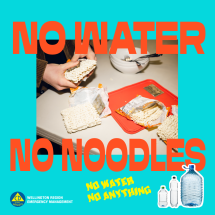
Why should we store water?
The Wellington Region’s water pipes cross earthquake fault lines in several places. In a big earthquake, the pipes that bring water to your taps could be damaged. So having your own water stored for the first 7 days means you can still eat, drink and keep clean during an emergency.
Sam Bishop, Head of Community Resilience and Recovery at the Wellington Region Emergency Management Office (WREMO), puts it this way: “Emergencies typically don’t give us any warning. Having water stored at home means less stress if clean drinking water suddenly becomes hard to get.”
How much should I store?
Aim for 3 litres per person per day. That covers the basics for drinking, cooking and washing. If you can, store 20 litres per person per day, for 7 days. That should meet all your drinking water needs until water stations are up and running. And don’t forget your pets – they need water too.
Getting started
Fill clean soft drink or juice bottles with tap water, screw the lids on tight and store them somewhere cool and dark, like under the bed or in a cupboard. Even an ice cream container filled with water and popped in the freezer can be used – that’s 3 litres of water stored already. Give anything that once held chemicals a firm “no thanks”.
Prefer something bigger? You can pick up a 200-litre tank from your local council.
Want more tips on storing water? There’s more info at wremo.nz/water. However you store it, start now.